


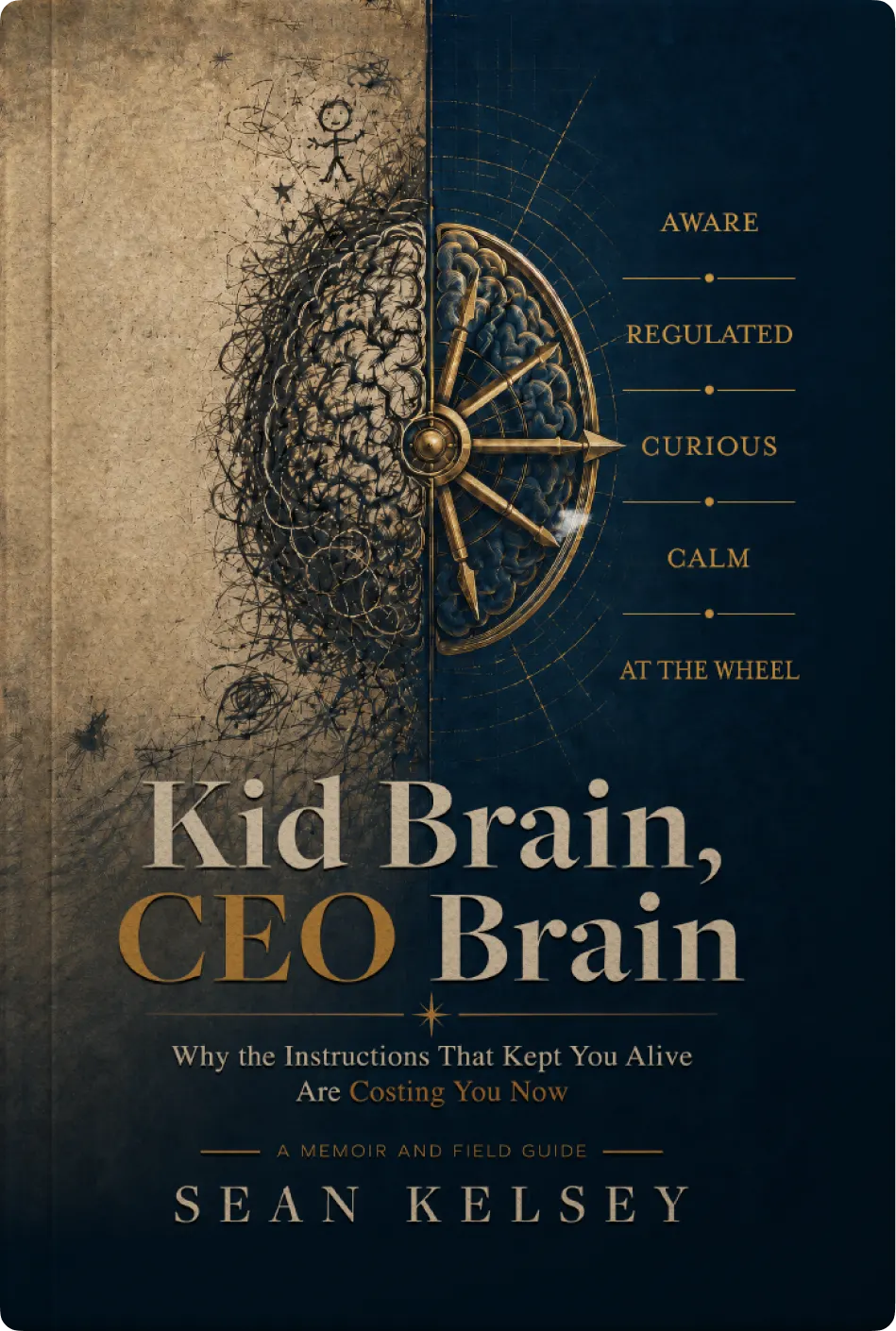
Kid Brain,CEO Brain
Why the Instructions That Kept You Alive Are Costing You Now
The premise
For most of my life, two versions of me have been arguing
I've come to call them Kid Brain and CEO Brain.
Kid Brain
CEO Brain

Survive

Aware
Don't trust
Regulated
Not enough
Calm
Urgent
Curious
Prove you belong
At the wheel
Kid Brain learned early that adults don't always show up, that comfort can be taken away, and that if he wanted something he'd better produce it himself. He runs on guilt, urgency, and the constant suspicion that he doesn't belong in the room.
He's fast. He's useful. He kept me alive.
CEO Brain showed up later. He gets curious before he gets certain. He can sit in discomfort without needing to fix it in the next four seconds.
He's a better leader, a better husband, and a better father.
He'd been there the whole time. I just never noticed him, because Kid Brain always got to the wheel first.
To be clear about the title: CEO Brain has nothing to do with a corner office. It's the version of you that stays steady when it counts — at work and everywhere else.
Where Kid Brain leads
They come with a bill
The instructions work. That's the problem — if they didn't work, we'd have dropped them a long time ago. They get people out of bad situations, into careers, into rooms nobody expected them in.
Then, slowly:

Work ethic becomes overwork.
Independence becomes isolation.
Preparation becomes anxiety.
High standards become pressure.
Problem-solving becomes control.
And the need to contribute becomes the belief that your value depends on always being useful.
The traits that move you forward turn out to be the same ones making it hard to rest, to trust, to connect, and to feel secure in anything you've built.
The things that helped you survive aren't bad. But they may need to evolve.
Your Foundation
Our foundations explain us. They don't have to define us
Every one of us has one.
It was built by the people who raised us, the people who failed us, what we endured, what we were given, what we got wrong, and the lessons nobody said out loud.
It shapes how you handle pressure. How you handle conflict. How you lead, how you love, and how you decide whether you belong in the room you just walked into.
Most of us never look at it. We just live inside it.
For most of my life, I didn't. I only asked one question about myself, and it was the wrong one: What's wrong with me? Eventually I learned to ask a different one: Where did this come from?
Some of what built mine:

A bus station at eight years old. Auburn to Syracuse, find the next bus, Syracuse to Utica. Nobody explained the route, so I learned it by watching. Watching became the first thing I was ever good at.
Eight families. Two group homes. I can't tell most of them apart. What I have instead is a bag that stayed mostly packed, and a rule I didn't know existed until I broke it.
Four lanes to two. State police in both ends of the driveway, the highway coned down because of the hill. I was in my room, and I could hear her. She said it was too hard.
A dropped lunch tray. Full cafeteria, everybody in there. For one second the whole room stopped, and then it turned into noise. That was the first real power I ever had.
Two brains. One learned to survive. One learned to lead. Only one of them was driving.

“None of that is trauma. All of it is a foundation, and all of it comes with instructions attached.”
– Sean Kelsey
Leading Yourself
My brain was never working against me. It was working for me
Using information it collected when I was a child.
Kid Brain drove for forty years. CEO Brain was in the car the whole time and never once got the wheel.
So the question I had to answer wasn't how to build a better version of myself. It was how to give the one I already had a turn.
That didn't happen because I decided it should. I tried that. Deciding to be different doesn't work if you don't understand what you're actually doing.
What worked was learning a handful of specific things about how I operate. Then I stopped asking what was wrong with me and started asking what my brain was trying to protect me from.
Some of what's helped me:
The scorecard nobody handed you. Measuring yourself against a standard no one agreed to, and discovering it has no finish line.
The five faces of imposter syndrome. Dr. Valerie Young's framework, and why two people with the same insecurity behave in completely different ways.
Wired for protection, not happiness. Why the instinct that keeps you safe is not the same one that lets you rest.
It's not about the mess. The reaction is never about the thing in front of you. It's about a conclusion your brain drew before you finished looking.
Three paperclips. Green, yellow, red, sitting on a legal pad where I can see them. The goal was never to stay green. The goal is to catch yellow sooner.

“Almost every regret I have was created in about five seconds. Not five years. Five seconds—the gap between something happening and how I chose to respond to it.”
– Sean Kelsey
Leading Others
Nobody experiences your intentions. They experience whatever you carried into the room
And they were reading it before you said a word.
Everything in the last section was invisible. Nobody watched me learn what my brain was doing. Nobody saw the paperclips work.
What shows up is what I bring through the door.
That's the thing I had backwards for most of my career. I thought leadership was decisions, vision, systems, accountability. Those matter, and I still believe in all of them.
But Kid Brain was never just my problem. Every chapter up to that point had been about me. The cost was always somebody else.
Some of what's helped me:
The people around you feel what you bring. My team could read the weather in the building before I had any idea I'd brought it in. They noticed before I did. Every single time.
One word. One unguarded word tells you where a relationship actually starts. Whether you agree with it is irrelevant. It's what's loaded.
Compliance versus ownership. A compliant team executes what you asked for. An owning team tells you your idea has a problem before they execute it.
Courageous conversations. Avoiding a hard conversation feels like kindness. It isn't. The problem sits there and grows, and everybody else absorbs it.
The most important corner office. Nobody had complained. Nobody asked me to stop working. They had just learned what an open laptop meant, and they'd stopped bothering.
“Understanding your foundation isn't self-indulgence. It's the only way to stop handing pieces of your story to people who had nothing to do with it.”
– Sean Kelsey
About Sean
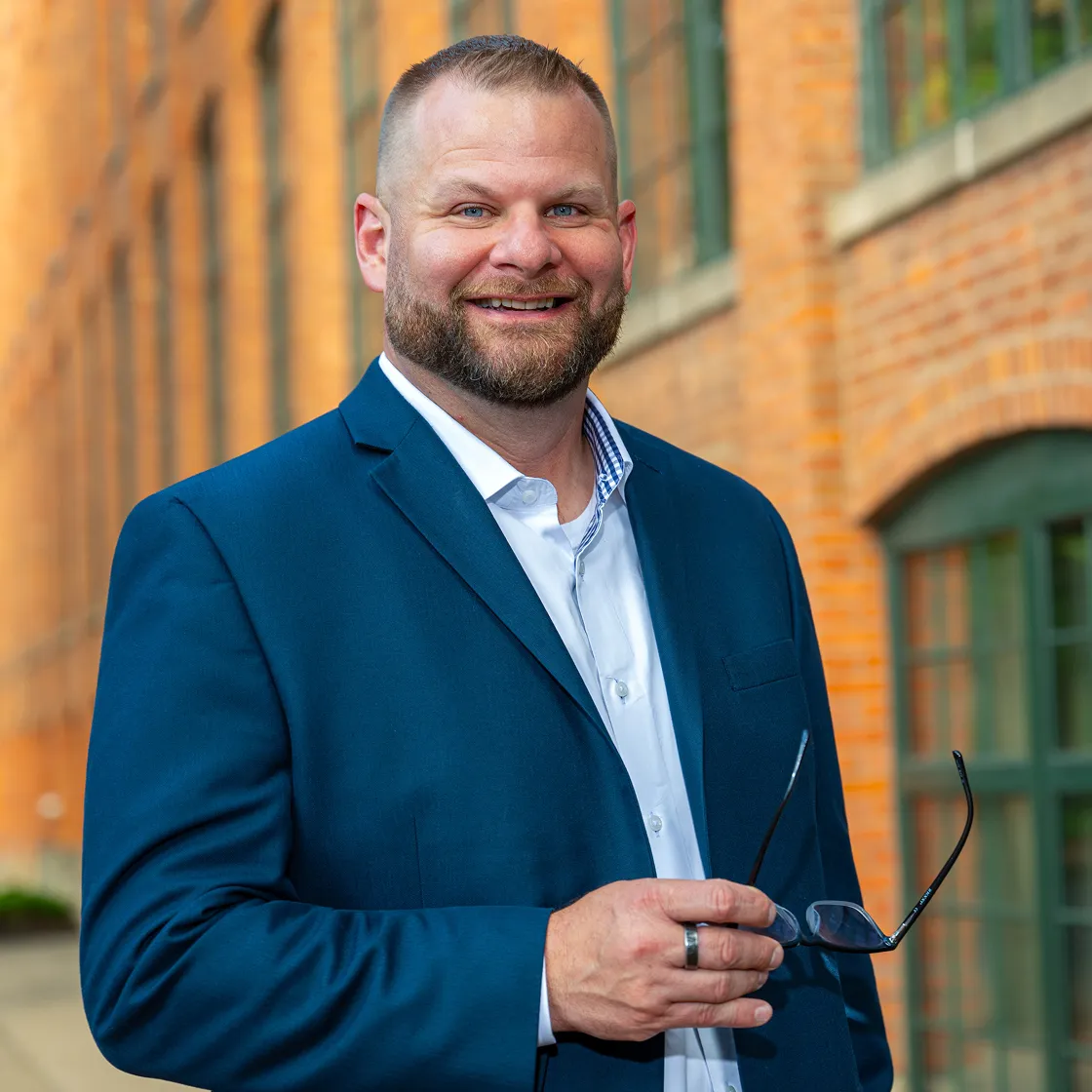
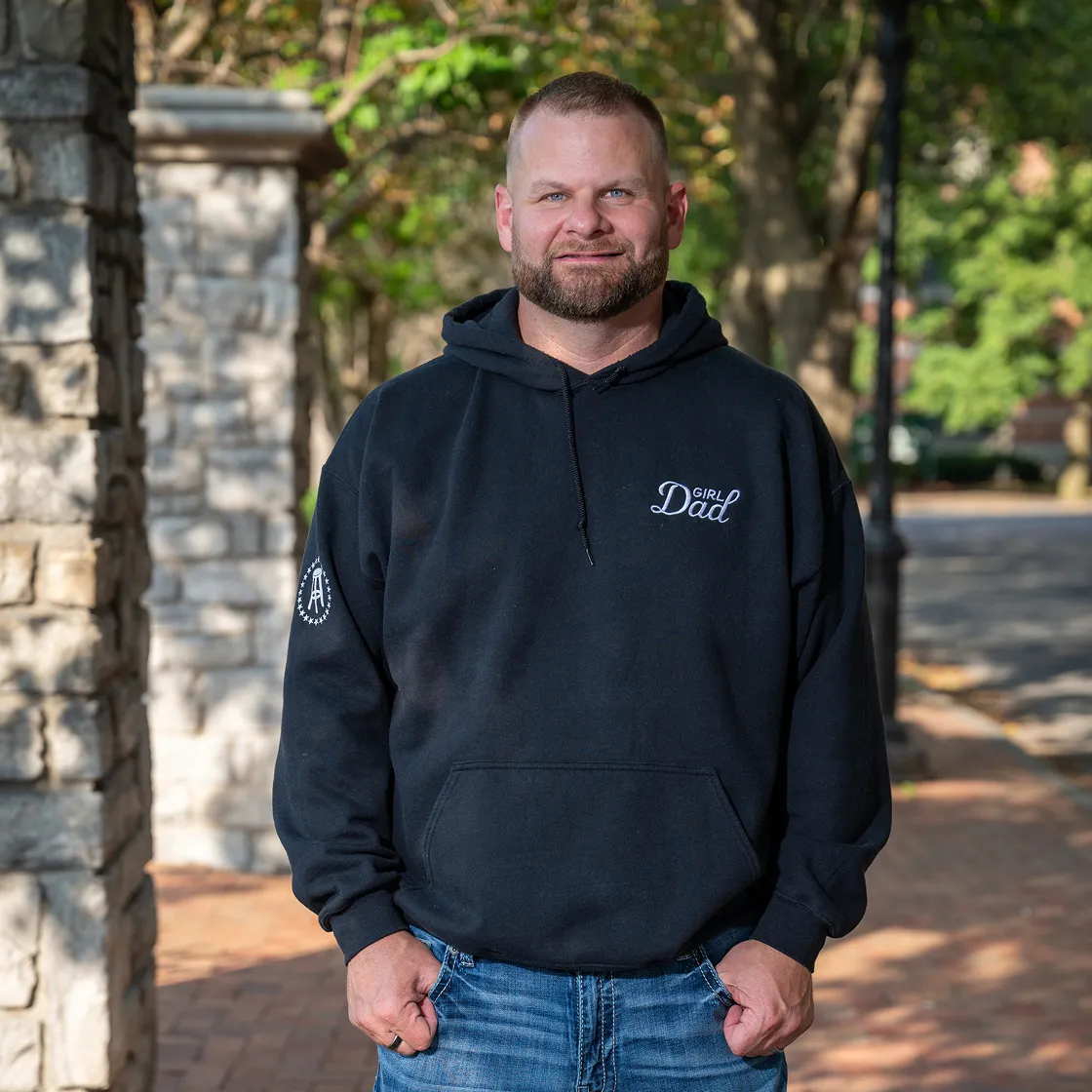
Sean Kelsey is the CEO of Nave Law Firm and the DWI TEAM, one of the largest DWI defense firms in the country.
He does not have a law degree. He does not have a college degree either.
He grew up in foster care in Central New York, moving through eight families and two group homes. He writes and speaks about self-awareness in leadership, and believes in being loyal to good.






Get the Book
Kid Brain, CEO Brain: Why the Instructions That Kept You Alive Are Costing You Now
A memoir and field guide.
Part memoir, part field guide, this is an honest look at how our foundations shape the way we lead, love, handle pressure, and decide whether we belong. It offers no formula, and it doesn't pretend every wound becomes a gift.
This is not the story of a man who figured everything out. It is the story of a man who finally became willing to look.
Reach Out
I'm not a professional speaker and I'm not selling anything here.
But if something on this page landed, and you'd like to talk — or you work with a group who might get something out of hearing it, a team, a group home, kids in foster care — reach out. I read my own email.

A note on content. This book discusses childhood abuse, including sexual abuse, addiction, suicide, and time spent in foster care. I've kept the detail out on purpose — the details were never the point. But I'd rather you know it's in there before you start than have it find you on page forty.
Where to go. If you're in crisis, call or text 988 in the United States for the Suicide and Crisis Lifeline. It's free, twenty-four hours a day. If you experienced sexual abuse, RAINN operates the National Sexual Assault Hotline at 1-800-656-4673, with online chat at rainn.org. It happens to men. They will talk to you. Locally in Central New York, Vera House supports survivors of abuse — verahouse.org. If you're looking for a therapist, Psychology Today's directory lets you filter by specialty, insurance, and location.
One more thing. You don't need to be in crisis to talk to someone. I wasn't. I was a functioning CEO with a good marriage and a growing company, and I went because I was tired of not understanding myself. That's a good enough reason.


